

Microbes are the quiet workers that turn kitchen scraps into rich soil.
And when you use them right, composting becomes faster, cleaner, and less smelly.
Microorganisms such as bacteria, fungi, and tiny invertebrates, carry out the chemistry that breaks down organic waste into compost.
Home composting keeps food and yard waste out of landfills and helps soil hold water and nutrients.
The U.S. Environmental Protection Agency notes that composting reduces food waste and builds healthy soil, and a well-managed pile can finish in months rather than a year.
MicrobiaLogic’s RTB 700 supports waste composting such as that of toilets and portable holding tanks.Environmental Protection Agency+1

What Are EM (Effective Microorganisms)?
What People Mean By EM
EM stands for effective microorganisms, a concept popularized by Dr. Teruo Higa in the 1980s.
EM mixes commonly include lactic acid bacteria, yeasts, photosynthetic bacteria, and certain fungi.
These groups work together in many settings, such as soil, compost, and fermentation to speed desirable breakdown processes.
EM is used in bokashi fermentation, compost tea, and some commercial inoculants.
What EM Can And Cannot Do
EM can help kickstart or balance microbial activity in a compost pile, especially when conditions are ideal (wet, compacted, with air circulation). smilinggardener.com
EM also works best when used with good composting habits.
Research shows that EM can help improve compost texture and odor when conditions are right.
Results may differ depending on the materials and how they’re managed, but many users see faster, cleaner compost when EM is part of their routine.
Think of EM as a natural booster that supports healthy, balanced composting.
When EM Is Worth Trying
Try EM when you need to speed a cold pile, reduce odor in a moist mix, or when you’re working in a small, contained system like bokashi buckets.
Microbes For Composting: Practical Setup & Materials
Core Ingredients Include Greens, Browns, And Air
All compost needs three basics:
Greens (nitrogen-rich materials like food scraps and fresh grass), browns (carbon-rich materials like dry leaves, straw, or shredded cardboard), and air (oxygen for aerobic microbes).
A common starting ratio is roughly 3–4 parts browns to 1 part greens by volume to avoid soggy, smelly piles.
The Arizona Department of Environmental Quality recommends similar balances for backyard composting.
Choose The Right System For You
Cold Bin (Passive)
Good for gardeners who don’t need to finish compost fast.
It’s important to turn occasionally.
Hot Pile (Active)
Needs more management; chopping material, monitoring moisture, and turning to keep internal temps high.
Produces finished compost in months.
Bokashi (Fermentation)
Uses EM-style inoculants in sealed buckets to ferment kitchen waste including some cooked food and small meat scraps.
Bokashi residue is later buried in soil or added to a compost pile.
EM is central to bokashi.
Moisture And Aeration: The Two Controls You Can Watch
- Moisture: Aim for a damp sponge feel. Too dry, and microbes slow down; too wet, and anaerobic bacteria create odors. Add more browns to soak up excess moisture.
- Aeration: Turning the pile every 1–2 weeks helps aerobic microbes work and stops foul smells that come from oxygen-poor breakdown.
What To Avoid Putting In Home Compost
Avoid large amounts of meat, dairy, oils, or greasy food in an open backyard pile — these attract pests and may not break down fully without high heat or contained systems like bokashi. The EPA recommends avoiding these items in typical backyard compost piles. Environmental Protection Agency
EM For Composting: How To Apply Microbial Treatments
Forms Of Microbial Products You Might Use
- Liquid EM Solutions: Diluted and sprayed into a pile or mixed into bokashi bran.
- Powder Or Granular Inoculants: Mixed into the pile at layering time.
- Bokashi Bran: Pre-inoculated bran used in sealed fermentation buckets for kitchen waste. smilinggardener.com
Simple Application Methods
- Layering Method: When you add a batch of food scraps to the pile, sprinkle a light scattering of EM solution or powder, then add a layer of browns.
- Bokashi Buckets: Add kitchen scraps and bokashi bran in layers, press down to remove air, seal the bucket, and let it ferment for 2–4 weeks. After fermentation, bury the material or add to a compost pile. EM plays a direct role here. smilinggardener.com
Use Small Test Areas First
If you’re trying EM for the first time, treat a portion of your pile or one bin so you can compare results. Some people see faster breakdown and fewer smells; others see no change. Track moisture, temperature, and time to finished compost over several months to judge value.
Safety And Handling Notes
Follow product labels for dilution and handling. EM products are generally low-risk, but keep them away from children’s reach and store per the label. If you use a commercial EM product, keep the MSDS for reference.
Composting Toilet Odor: Prevention & Microbial Remedies
Why Composting Toilets Smell And How Microbes Help
Composting toilets that stay aerobic (with oxygen) tend to have fewer odors because aerobic microbes break down waste into CO₂ and water. Odor appears when conditions become anaerobic (no oxygen), or when the carbon-to-nitrogen balance is off, or the pile is too wet. Adding appropriate carbon (sawdust, wood chips) and keeping good airflow are the main fixes. Microbial products can support an aerobic community but won’t replace basic pile care. The National Park Service recommends carbon bulking material and ventilation for composting toilets. National Park Service+1
Using RTB Products Appropriately For Composting Toilet Care
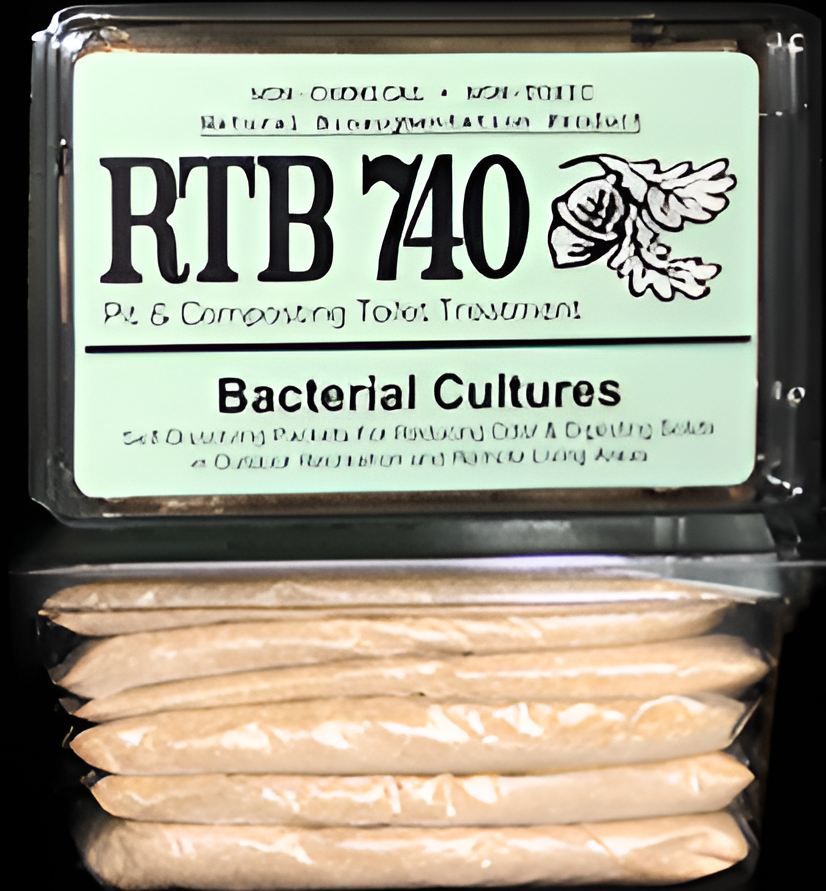
- RTB 740 (For Pit & Composting Toilets): RTB 740 is formulated for pit and composting toilets and does not contain dyes or fragrances. It aims to speed digestion and reduce odor biologically. Use one packet weekly while the toilet is in service, per RTB 700 series guidance. This product is for when water is limited and composting or pit toilets are used in outdoor settings. (Product info from MicrobiaLogic.)
- How To Apply RTB 740: Toss a water-soluble packet into the toilet chamber; the packet dissolves and releases bacteria. Alternate application points if multiple fixtures are in use. Keep carbon sources (sawdust or wood shavings) on hand to cover fresh waste and keep moisture down. (Follow the product label and MSDS for exact directions.)
Keep Expectations Realistic
RTB 740 supports microbial activity and helps reduce odor formation when used correctly, especially in systems where you can control moisture and add carbon. It won’t fix a poorly ventilated or water-logged toilet by itself. Ventilation, leachate control, and regular removal of finished material are still essential. National Park Service
Portable Toilets For Vans: Compact Solutions & Odor Tips
Why Vanlife Needs Different Rules
Portable toilet setups for vans and small RVs have limited tank capacity and close proximity to living space. Odor control and ease of dumping matter more than in remote pit systems. Holding-tank treatments that help liquefy solids and reduce smell are valuable for multi-night trips.
RTB 780: What It Is And When To Use It
MicrobiaLogic’s RTB 780 is formulated for portable toilets and holding tanks. It contains a biodegradable blue dye and apricot fragrance for users who expect a visible and scented treatment in small, close-quarters tanks. Use RTB 780 packets according to the product label — generally one packet weekly while the unit is in service — and empty/dump as appropriate for your tank capacity. (Product info from MicrobiaLogic.)
Practical Van Tips To Reduce Odor
- Empty holding tanks before they reach full to avoid prolonged anaerobic conditions.
- Rinse and clean tanks at dump stations where allowed.
- Use carbon-based additives (sawdust for composting toilets) or RTB 780 for holding tanks when you need a scented, colored treatment that users recognize.
- Park and store the van away from heat when possible; heat speeds decomposition but can raise odors if tanks are not vented well.
Troubleshooting Common Compost Problems
Pile Smells Like Rotting Meat
Likely too wet or too much green material. Add more browns and turn the pile to add air. Bokashi-fermented material can be added but buried or mixed into a compost pile to finish.
Pile Is Slow To Break Down
Check moisture and size of particles. Smaller pieces decompose faster. Add a handful of soil or finished compost to introduce active microbes, or try a small EM inoculation on part of the pile to test effect.
Fruit Flies Or Pests
Cover fresh food scraps with a layer of browns or use a closed composter. Bokashi buckets help keep pests away because they’re sealed.
Safety Notes And When Not To Use Microbial Inoculants

Avoid Overreliance On Additives
Good balance of browns and greens, moisture control, and aeration are the primary factors that determine compost success. Microbial inoculants can help in niche situations, but they don’t replace core composting steps. Environmental Protection Agency
Keep Human Waste Separate (Unless In A Proper Composting Toilet)
Don’t add human sewage to a backyard garden compost pile unless you use an approved composting toilet system with proper design, composting time, and handling protocols. Follow local health guidelines or the National Park Service composting toilet guidance for safe operation. National Park Service
Frequently Asked Questions
What Are EM Microorganisms?
EM are blends of beneficial microbes — bacteria, yeasts, and fungi — used to support fermentation and decomposition in systems such as bokashi and some compost setups. Results vary by system and product. Wikipedia
Can I Put Meat In Compost If I Use Bokashi?
Yes, bokashi fermentation accepts small amounts of cooked food and meat because the sealed, anaerobic fermentation preserves material for later burial or composting. After fermentation, bury or add to a compost pile to finish decomposition. smilinggardener.com
How Do I Reduce Composting Toilet Odor?
Keep the system aerobic: add carbon (sawdust), maintain ventilation, control moisture, and consider a microbial product like RTB 740 for pit or composting toilets in outdoor sites. Follow product and system guidelines. National Park Service+1
Use Microbes For Cleaner Compost And Less Odor
Microbes are the heart of composting.
If you keep the basics right, microbes will do the work.
EM and other microbial products can help in certain situations: speeding a cold pile, supporting bokashi systems, or reducing odor in composting toilets and portable holding tanks.
For pit and composting toilets, consider RTB 740; for portable tanks in vans or boats, RTB 780 is the MicrobiaLogic product that matches user expectations for compost treatment.
If you want product specifics or dosing info for RTB packets, contact us today.
We can share more of the product details so you can pick the right option for backyard composting, camp toilets, or portable holding tanks.


